
What Watch Polishing Involves
The exterior of a watch takes a different kind of wear than the movement does — daily contact with surfaces, clothing, and other objects leaves scratches, scuffs, and dulling over time. Polishing and restoration work focuses on the case, lugs, bezel, and bracelet, bringing the surface finish back to something close to its original state.
The word "polishing" can sometimes imply a single process, but in watchmaking it refers to several distinct techniques depending on the surface involved. A brushed finish — the matte or satin texture found on many case sides and bracelet links — requires different tools and methods than a mirror-polished surface. Mixing these up, or applying full polishing where brushing was intended, changes the character of the watch in a way that's difficult to reverse. We take care to identify the original finishing on each surface and replicate it as closely as possible.
Understanding Surface Finishes
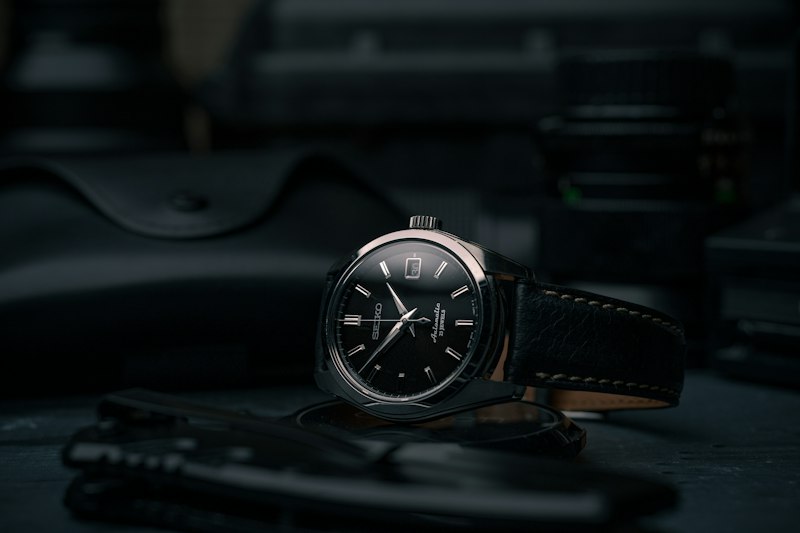
Most watch cases combine two types of finish. The top surfaces of lugs, certain bezel areas, and the center links of some bracelets are often mirror-polished — smooth, reflective, and achieved through progressively finer abrasives followed by a buffing compound. The sides of the case, the outer bracelet links, and crown flanks are typically brushed — a directional, matte finish applied with specific abrasive media at a consistent angle.
Vintage watches present a particular consideration. Some collectors specifically value the patina and honest wear on an older piece, and over-polishing a vintage watch can reduce its character and, in certain cases, its collector value. When a vintage watch comes in for polishing, we discuss the extent of the work first — sometimes a light clean and targeted touch-up is more appropriate than a full refinish.
What Polishing Can and Cannot Address
Surface polishing is effective for light to moderate scratching and dulling. It removes a very small amount of material in the process, which allows it to level out minor surface imperfections. It does not, however, address deep gouges that would require more material removal than is safe, dents that require reshaping, or damage to crystal surfaces (those are addressed separately through crystal replacement or crystal polishing).
Cases with heavy wear over many years may improve significantly but may not return to a factory appearance — and we will say so during assessment rather than overstate what the work will achieve. Our job is to give you an honest picture of what's possible, not to promise results we can't guarantee.
The Polishing Process
Before any polishing begins, we remove the movement from the case to protect it from any abrasive particles or moisture. The case and bracelet are then cleaned to remove surface contaminants that could interfere with the finishing work.
Polishing proceeds systematically — starting with the brushed surfaces using directional abrasive media, then moving to the polished surfaces with progressively finer compounds. Each link of a bracelet is worked individually where different finishes are present on different faces. After finishing, the case is cleaned again to remove all residue before reassembly.
If the service is being combined with a movement service, the timing is straightforward — the case work is done while the movement is being serviced, and the watch is reassembled once both are complete.
Bracelet Restoration
Bracelets tend to accumulate wear more quickly than cases, particularly at the clasp area and on the inner surfaces of links where friction is greatest. Bracelet polishing follows the same principles as case work, with attention to each link's individual finishing. Stretched or loose bracelets are a separate matter — link adjustment and clasp repair are mechanical issues rather than surface finishing issues, and we address those separately.
When to Consider Polishing
There's no set schedule for polishing the way there is for movement servicing. It's largely a personal preference. Some owners prefer the character that comes with visible wear, while others prefer to keep the watch looking closer to how it left the factory. The decision usually comes down to how the scratching affects your enjoyment of wearing it.
One practical consideration: if you're planning to have the movement serviced, it's often convenient to combine that with case polishing so the watch is fully refreshed at the same time. It doesn't change the technical requirements of either service, but it simplifies the process from the customer's perspective.
The Polishing Process — Step by Step
- Movement removal — The movement is removed and protected before any surface work begins.
- Surface assessment — We document the original finish type on each surface and note areas of particular concern.
- Initial cleaning — Ultrasonic cleaning removes debris and contaminants from all surfaces.
- Brushed surface work — Directional finishing media restores matte and satin textures.
- Polished surface work — Progressive compounds restore mirror surfaces on the appropriate areas.
- Final clean & inspection — All residue is removed and the result is inspected against the original finish reference.
- Reassembly — Movement is reinstalled and water resistance is tested where applicable.
What to Bring In
When you bring in your watch for polishing, it's helpful to mention any specific areas that concern you — a scuff on a particular lug, a dulled clasp, a bracelet link that's more scratched than the rest. This helps us prioritize the areas that matter most to you.
If you have any original paperwork or photos showing what the watch looked like when new, those can be useful references, though they're not required. We're familiar with the finishing patterns of most common brands and references.
Bring Your Watch In
Walk-ins welcome during business hours. Questions? Reach us by phone or the contact form.
Contact Us +1 416-955-5924Business Hours
Monday – Friday: 9am – 6pm
Saturday: 10am – 4pm
Sunday: Closed